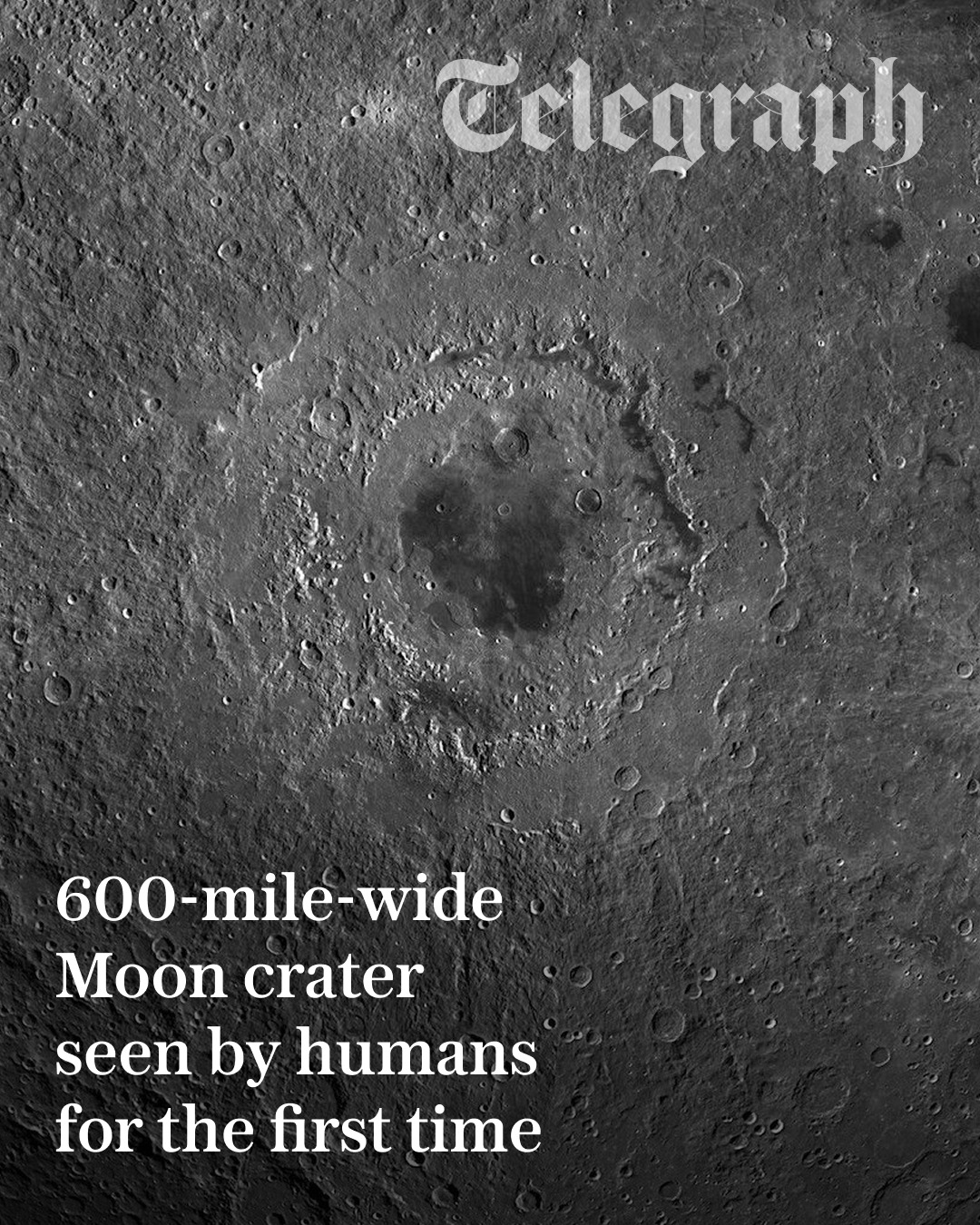
인류가 처음으로 본 달 이면 폭 600마일의 분화구
The Telegraph
팔로우
For 3.8 billion years, the breathtaking view of the Orientale basin has lain hidden towards the far side of the moon. But now, the four astronauts on Nasa’s Artemis II mission have become the first humans to see the geological marvel with their own eyes
~~~~~~~~~~~~~~~~~~~~~~~
Historic First: Artemis II Crew Witnesses the Orientale Basin in Full
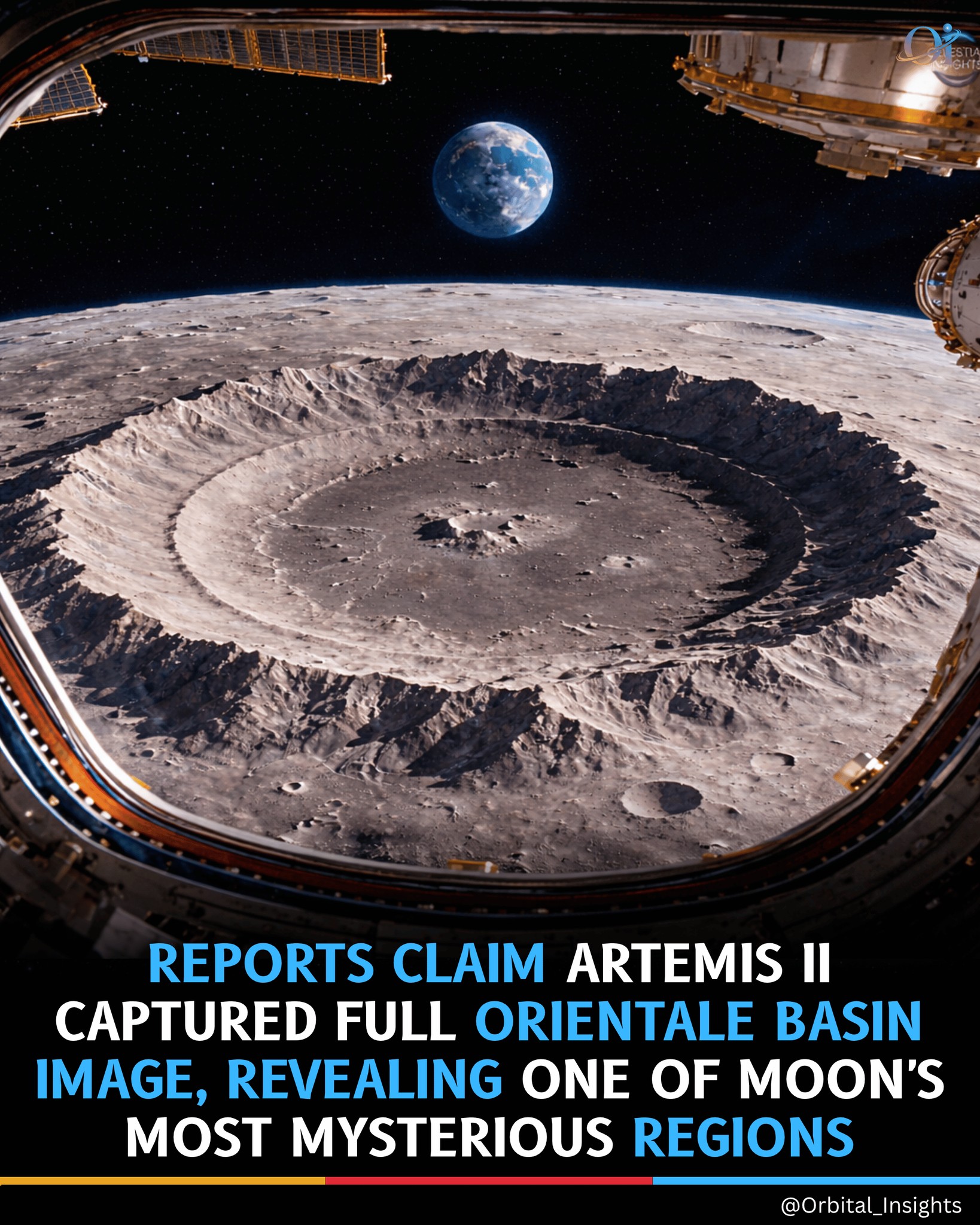
BREAKING: For the first time in human history, the full scale of the Moon’s Orientale Basin has been witnessed by human eyes. Astronauts aboard the Artemis II mission captured this breathtaking view from the Orion spacecraft, marking a monumental milestone in deep-space exploration.
The Target: A 600-Mile Lunar Target
The Orientale Basin is a massive, multi-ringed impact crater stretching roughly 600 miles wide. Formed billions of years ago, its concentric rings ripple across the lunar crust like a stone dropped in water. Because it sits on the extreme edge of the Moon’s near side, it is never fully visible from Earth, appearing only as a distorted sliver at an angle.
The Shot of a Lifetime
The newly released image was taken through an Orion capsule window as the crew passed directly over the site. The timing was impeccable: as the spacecraft began its descent toward the lunar far side, the camera captured the basin’s entire diameter with Earth perfectly framed in the black void above.
Entering the "Zone of Silence"
As Orion continues its trajectory, the mission is entering its most solitary phase. The crew is currently moving behind the Moon, which will result in approximately 40 minutes of total radio silence as the lunar mass blocks all communication with Earth.
The crew is now heading into the shadows. Next stop: the far side of the Moon.
Orbital Insights
팔로우
Reports suggest that Artemis II may have captured an unusually complete view of the Orientale Basin, one of the most massive and least understood regions on the Moon. This basin, known for its striking ringed structure, has remained difficult to observe fully due to its position and lighting conditions.
If confirmed, such imagery would provide valuable insight into the Moon’s geological history, including the formation of large impact basins and the evolution of its surface. Advanced imaging systems aboard modern missions allow scientists to study these features with far greater clarity than ever before, potentially revealing new details about this mysterious region.
Beyond the science, moments like this represent the growing reach of human exploration. Each new observation helps expand our understanding of the Moon and reinforces the progress being made as humanity returns to deep space.
Source: NASA Artemis mission context and reported observations
Disclaimer: Shared for informational/Educational purpose only

'뉴스.론평.기타' 카테고리의 다른 글
| 종중從中하는 한국 언론의 간첩질. (0) | 2026.04.07 |
|---|---|
| 미국 트럼프 대통령의 3면 작전 드러나다! (0) | 2026.04.07 |
| 트럼프 대통령의 대(對) 이란 격노(激怒)의 메세지 (0) | 2026.04.05 |
| 영국이 추진하는 호르므즈 안전운항로 (0) | 2026.04.04 |
| NASA Artemis II 우주선(Orion capsule)에서 보내온 지구사진 (0) | 2026.04.04 |